
Glass artists photograph a finished panel with daylight passing through its colored sections. The design reads well, but the window frame leans, the brightest pieces lose their internal variation, and the surrounding workshop distracts from the work. Preparing this image requires several decisions that belong to different parts of the photograph. AI photo editing software becomes useful when those decisions follow the panel rather than a general preference for a brighter, more dramatic image.
The photograph presents transmitted light, reflective surfaces, and opaque joining lines together. Adjusting one property changes the relationship between them. Glass artists therefore begin with the recorded design and the purpose of the portfolio image. The result communicates the panel through a considered photograph, while its construction, dimensions, and material descriptions remain grounded in the physical work.
Read the Panel before Using AI Photo Editing Software
Glass artists first separate photographic geometry from the geometry of the design. A leaning camera produces a different problem from an irregular line deliberately included in the panel. The surrounding frame supplies reference edges, while the artwork supplies its own pattern. Straightening is judged against the photographed frame, not against an assumption that every lead line needs to become vertical.
AI photo editing software is then assessed through these references. The artist identifies a border, a bright glass section, and a darker section with internal variation. These locations represent different questions about the image. The border concerns orientation, the bright section concerns retained detail, and the dark section concerns tonal separation. Choosing them before editing keeps the evaluation attached to the work. A striking color elsewhere in the image does not replace an unresolved problem in one of these reference areas.
Establish the Viewing Purpose before Changing the Photograph
A portfolio overview and a close photograph of a joint serve different purposes. Glass artists choose the view according to the information it contains. An overview shows the relationship between the panel and its outer frame. A detail photograph explains the connection between individual pieces and the joining lines. Neither becomes a substitute for the other merely through a tighter crop.
Before applying AI photo editing software, the artist also checks how the panel was lit. A reflected room lamp differs from light passing through glass. Dark workshop equipment behind a transparent section belongs to the photographed scene rather than to the panel design. These distinctions guide later corrections. Another photograph with different lighting remains a separate source when the existing view obscures an important part of the work.
- Identify frame edges before correcting the photograph orientation
- Choose bright and dark glass sections for repeated comparison
- Separate transmitted light from reflections on the surface
- Keep overview photographs distinct from joint detail images
- Check the saved image against the actual panel design
Coordinate Geometry and Tone in AI Photo Editing Software
Orientation is considered before the final crop. Glass artists assess whether the frame reads as photographed, then choose the image boundary that supports the portfolio view. A crop removes surrounding image area; it does not document a section that was never included. The border of the panel remains present wherever it is needed to explain the full design.
AI photo editing software then supports a comparison of tonal changes. Exposure, highlights, shadows, and white balance affect different relationships in the image, so they are evaluated through the selected reference areas. The artist watches the pale glass and the opaque joining lines together. A brighter panel is not automatically a more informative panel if neighboring pieces merge. Each accepted change answers a named problem before another adjustment follows.
Match Adjustments to the Photographic Evidence
Glass artists consider the amount of detail already present, the lighting, and the contrast between colored pieces. A small tonal change affects a narrow pale section differently from a broad dark section. The evaluation therefore includes relationships across the design rather than a single attractive fragment.
The role of AI photo editing software is to carry these photographic decisions into a saved image. The chosen setting is judged by its effect on the photograph, not as a new measurement of the glass. A hue in the image does not independently establish the material specification. Glass artists compare the finished portfolio view with the physical work and its recorded description. The adjustment sequence remains a presentation decision, while factual statements about the panel retain their separate foundation. This distinction also helps when selecting several photographs for the same portfolio entry.
| Adjustment | Effect | Use Case | Review Point |
|---|---|---|---|
| Straightening the photograph | Changes orientation within the image plane | Panel recorded with a leaning outer frame | Frame references remain consistent with the photographed view |
| Cropping surrounding workshop area | Reduces competing content around the work | Portfolio overview with unnecessary space beside the border | Full design remains represented by the chosen boundary |
| Highlight adjustment | Reweights pale image sections | Bright glass with faint internal variation | Neighboring pieces retain their separation |
| Shadow adjustment | Alters relationships within darker areas | Deep colored section beside opaque joining lines | Construction lines remain distinct from transmitted detail |
| White balance adjustment | Shifts the overall color relationship | Mixed illumination affecting the recorded appearance | Color judgment stays tied to the work and lighting |
| Separate saved portfolio image | Preserves a presentation version for its purpose | Delivery alongside a closer construction photograph | File identity matches the panel and chosen view |
Treat Reflections and Panel Features as Different Evidence
A reflected shelf or lamp does not have the same origin as a line in the glass design. Glass artists follow the form through the photograph before deciding what needs attention. Removing an unwanted object replaces image content in that area. Its suitability for a portfolio view is therefore judged against the design, especially where the reflection crosses a distinctive piece of glass.
With AI photo editing software, a plausible replacement remains a photographic edit. It does not independently document the concealed pattern. Glass artists use another recorded view when an important design feature needs to be shown without interference. They also retain natural differences in brightness across the panel where those differences explain the photographed lighting. Making every piece equally prominent changes the visual balance.
Continue the Panel Review in AI Photo Editing Software
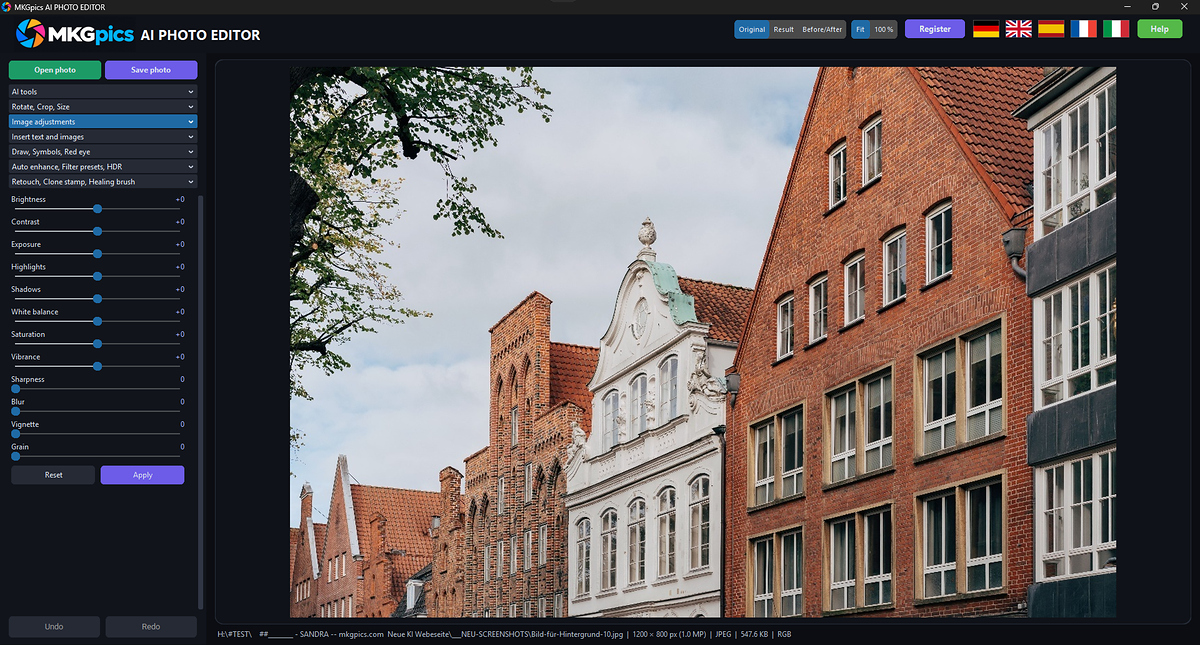
The AI photo editing software combines cropping, straightening, image adjustments, and AI functions on the same photograph. Glass artists compare the current result with the original and take back a step that changes the design presentation unfavorably. Between a pale glass section and its opaque border, AI photo editing software requires a joint tonal review because brightening one area also changes how the neighboring construction line reads.
Processing takes place on the local computer without uploading the panel photograph. The saved result is a new file, leaving the source image intact. Glass artists export the accepted version as PNG, JPG, WebP, TIFF, or PDF according to its use. They then open that actual output and judge its presentation size. A completed editing view is not substituted for checking the file that will accompany the portfolio entry.
Assemble the Portfolio Entry around Identifiable Views
The final overview is considered alongside any construction details. Glass artists check that the pictures show the same panel and that each view has a separate purpose. AI photo editing software does not replace that editorial relationship. A detail of a different lighting condition remains another photograph, even if its colors resemble the accepted overview more closely.
File names connect the work with the view and editing state. A later tighter crop receives another review because it gives individual pieces more weight within the image. The full source photographs remain available for future decisions. Glass artists keep the portfolio description attached to the physical panel rather than drawing new material claims from a processed color.
Let the Recorded Design Govern the Portfolio Image
Glass artists evaluate AI photo editing software through the panel relationships that need to survive the edit. Orientation, tonal separation, and surrounding content are reviewed as different decisions. The saved overview is checked with its companion details and assigned to the correct work. A more striking color or brighter fragment is not enough to approve the whole photograph. Physical descriptions remain grounded in the panel, while the edited file serves its chosen presentation purpose. New lighting or a different view begins another photographic assessment. This keeps the portfolio image informative without turning calculated replacements or stronger color relationships into new claims about the design and construction of the glasswork.